Medicinal Steam Baths

Steam baths were often prepared for various complaints. They were beneficial in many cases of rheumatism, deep bruising, and skin afilictions; for limbs after they had been broken and set; for women to relieve pain after childbirth, and for many other sicknesses.
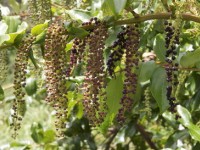
One method was to heat a pile of stones with fire; then arrange it as a low platform. On it were placed branches of whatever tree was chosen for the complaint being treated. Over this was poured a quantity of water to create steam; then a flax mat was placed over the leaves, and the patient sat on top of this, covered by a cloak to keep in the steam.
 (this is Thailand, but pic is just to help give you an idea of Maori version of medicinal sitting steam bath)
Sometimes heated stones were thrown into a container of water in which a quantity of leaves had been steeped. Then the stones were covered with more branches, with a flax mat on top. The patient, covered with a cloak, sat herself over this. For a vapour bath after childbirth, branches of fuchsia, bush lawyer and mangeao (a tree which grows from North Auckland to Rotorua) were steeped in water. Maori women have told me that mangeao was used for many women’s complaints. Sometimes an actual bath was given. They put the hot water, in which bark or other material had been steeped, into a length of tree trunk which had been hollowed out, or they used an old canoe. Bark containing tannin was good for bruised limbs. In this case the patient lay in the hot water for some time (see kowhai).
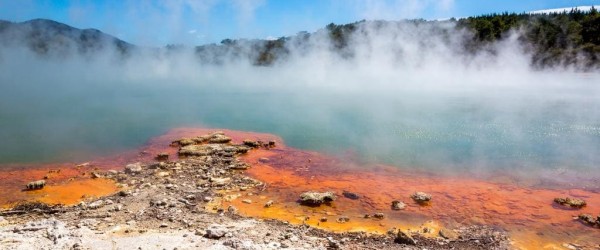
 Kerosene Creek in Rotorua
In early times when their food, especially the fern root, often caused constipation, piles were a common complaint. To soothe this condition, a special form of vapour bath was constructed. A small narrow tunnel was dug into a low bank, about eighteen inches from the top. At the far end a fire of totara chips was lit, the smoke escaping through the shaft, and the patient sat on top of the bank over this outlet. The smoke gave relief, and if this treatment was taken frequently, it caused the piles to shrink, and cured the condition. In Rotorua they lay in the sulphur springs for this complaint.
Mayor Richard Cruise, on the ship Dromedary came in 1820 to collect a cargo of kauri spars. On his return to England he wrote a book called journal of a Ten Months’ Residence in New Zealand. He is written of as “an accurate and shrewd observer of the Maori people”.
Here is an extract from his book.
We once observed a man, who accidentally inflicted a severe cut upon his leg with an axe; he immediately squeezed the juice of a potato into the wound, and tied it up, and in a few days it was quite well. There did not appear to be any particular description of persons to whom they applied in cases of sickness, but, when so circumstanced, they have recourse to different herbs and plants, with which they seem extremely well acquainted; and one of the gentlemen who was afflicted with an eruption on his lips, was cured by the application of a decoction of herbs given to him by a native. (1834) Note: The “potato” could also be a kumara.