AKAKURA, PUATAWHIWHI
Metrosidems fulgens

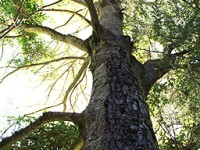
The main stem of this Vine attaches itself to the trunk of a mature tree, and climbs by aerial roots which cling to the tree.
 The leafy branches on which the yellow—reddish flowers appear
do not have aerial roots; neither does the leafy foliage at the
summit, which is covered with a splendid show of bloom
above the forest.
The leafy branches on which the yellow—reddish flowers appear
do not have aerial roots; neither does the leafy foliage at the
summit, which is covered with a splendid show of bloom
above the forest.
Like other varieties of rata, the bark contains much tannin. The curative value of the bark was well known to the Maori people.
Bark should be taken from the side on which the sun rises (Laing & Blackwell). The inner bark was boiled and the liquid drunk for “Maori sickness”. This also cured sores and stopped bleeding. Sore eyes were bathed with the sap.
Short lengths of the vine were cut and the sap was blown from it on to wounds and new cuts. This both sealed and cured them. The juice of the stem was given for coughs and at the same time was an astringent and tonic drink. Maoris have told me of poisoned fingers and cut knees which had become suppurated, being cured by this vine, either by bathing them in the liquor from the boiled inner bark, or by applying the sap; and to bushmen it was a safe and handy antiseptic.
Laing 8; Blackwell had this to say: “Bushmen quench their thirst with the juice of the vine which, if cut and the bark left hanging, exudes a large quantity of clear juice tasting somewhat like cider.”